Our Events

Join us in Downtown Brooklyn for live events exploring psychoanalysis and its many intersections with community, culture, and care.

Whether you’re exploring psychoanalysis for the first time or you're a clinician seeking training or continuing education, our events offer space for reflection, dialogue, and connection—from film screenings and town halls to author talks and intimate discussions.
BISR Course: Fyodor Dostoevsky - The Idiot
Jan
27

BISR Course: Fyodor Dostoevsky - The Idiot

  • The Foundation for Community Psychoanalysis (map)
  • Google Calendar ICS

Enroll here!

Course Schedule
January 27 — February 17, 2026 (4 consecutive weeks)
Tuesdays, 6:30-9:30pm

Instructor: Ruth Averbach

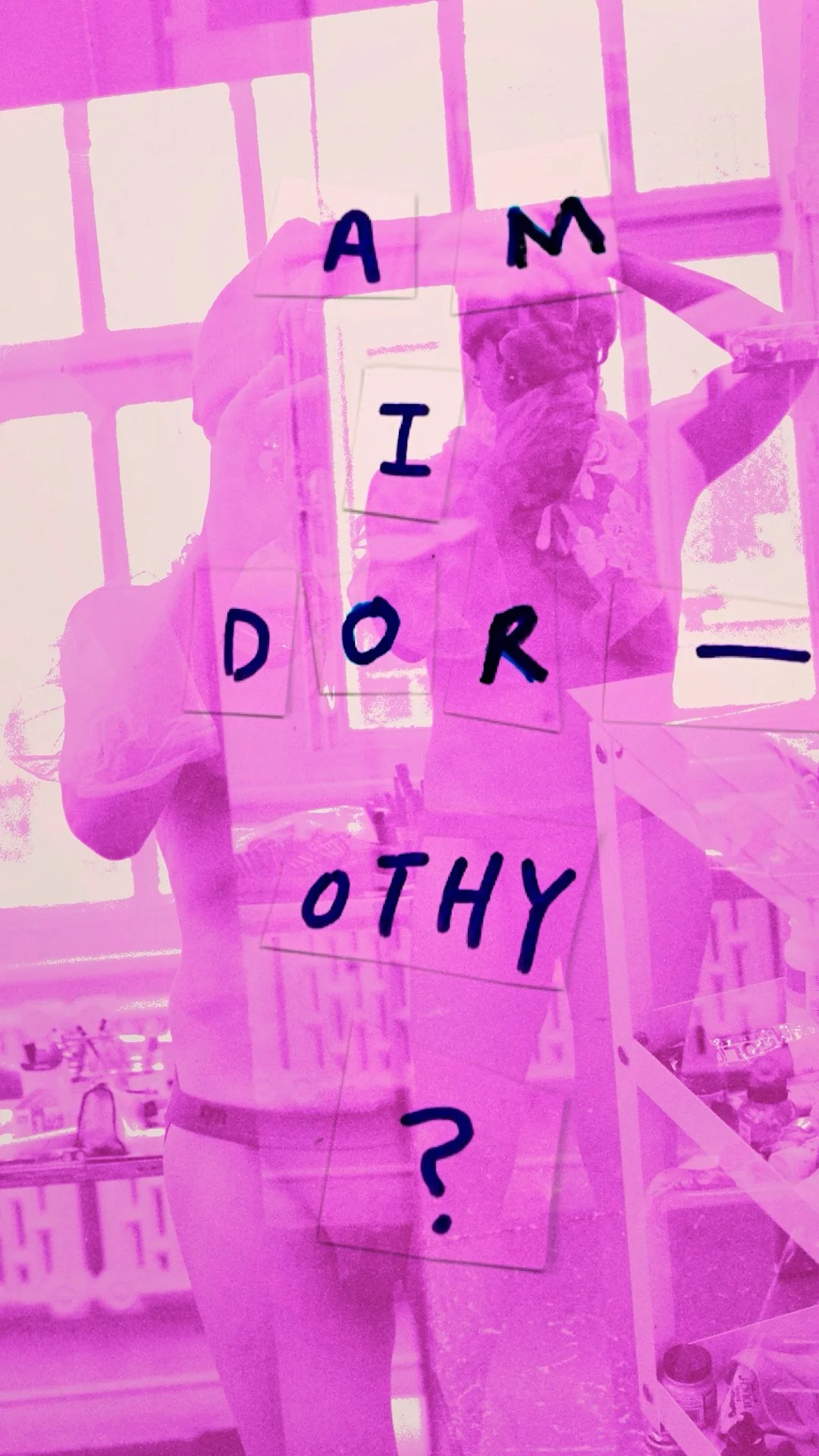
Fyodor Dostoevsky’s The Idiot offers an intricate exploration of innocence, morality, and the complexities of human nature set against the backdrop of a rapidly changing and radicalizing Russian society. Characterized by biographer Joseph Frank as “the most personal of all Dostoevsky’s major works, the book in which he embodies his most intimate, cherished, and sacred convictions,” The Idiot follows the life of Prince Myshkin, a saintly yet naïve young man, whose goodness is continually taken advantage of by those around him. Far from being a fool, he is somebody who causes people to question their routine assumptions and values. The novel is both a philosophical inquiry and a psychological drama, where Myshkin’s naive idealism creates a mirror for the darker traits of the people around him. Dostoevsky’s novel offers piercing insight into the psychology of belief and action, and the meaning of values in the seeming Godlessness of modern life. Can true good exist in an evil world? What are the psychological and moral consequences for an individual who pursues spirituality over materiality? What do we owe our fellow man and ourselves?

In this course, we will address these questions by reading the entirety of The Idiot (in Richard Pevear and Larissa Volokhonsky’s translation) alongside critical examinations of the historical and cultural context of 19th-century Russia. Throughout the course, we will attend to the vital moral, philosophical, and religious questions that guided Dostoevsky’s pen: What effect would a genuinely good person have on those around him? Would he inspire them to become better people, or would his superior virtue provoke their resentment? Is it possible that good does more harm than evil? Can one truly appreciate the beauty of the human soul amid the grotesque material reality of human existence? Is anyone truly innocent or are we all guilty? And how does one truly love their fellow man in all of their imperfection?

Brooklyn Institute for Social Research is an interdisciplinary teaching and research institute that offers critical, community-based education in the humanities and social sciences. Holding courses both online and in-person (in New York City and beyond), we integrate rigorous but accessible scholarly study with the everyday lives of working adults and re-imagine scholarship for the 21st century.

View Event →
Working Group on Community Mental Health
Jan
28

Working Group on Community Mental Health

  • The Foundation for Community Psychoanalysis (map)
  • Google Calendar ICS

If you’re new to this space, please sign up here! Workers in the institutions of community mental health are especially invited, but all are welcome.

The institutions of community mental health are broken. Clients are captured by the institutional circuit, shuffled between supported housing, jail, hospital, day program, case management, clinic, homeless shelter, and the street. This fragmentation has made “continuity of care” a buzzword, placing hope in the technocratic expansion of surveillance, assessment, and measurement. In reality, workers are left holding the pieces, providing needed care outside our formal work roles and frequently ending up frustrated, dejected, and burnt out.

We are not alone. Though institutions are siloed, our shared work can be an occasion for solidarity. This Working Group will gather workers in many roles and contexts of care. United by our recognition of systemic failure and our desire to build something better, we aim to theorize our work, develop new approaches, and build capacity to put them into practice. We will draw on our own experience, contemporary scholarship, and historical precedents to resist the dehumanizing effects of the status quo and put forward alternatives.

The Working Group will be facilitated by Dr. Christopher Landry.

View Event →
Experiencing Bion's Learning from Experience
Jan
31

Experiencing Bion's Learning from Experience

  • The Foundation for Community Psychoanalysis (map)
  • Google Calendar ICS

Organized by Nathan Rice—if you're interested in participating, please contact Nathan at everchange@gmail.com.

On January 31st, a group of people will assemble in the library of The Foundation for Community Psychoanalysis to read aloud Bion's book, Learning from Experience.

99 pages. One acknowledgement. One Introduction. Twenty-eight chapters. One reader per chapter.

View Event →
BISR Course: Fyodor Dostoevsky - The Idiot
Feb
3

BISR Course: Fyodor Dostoevsky - The Idiot

  • The Foundation for Community Psychoanalysis (map)
  • Google Calendar ICS

Enroll here!

Course Schedule
January 27 — February 17, 2026 (4 consecutive weeks)
Tuesdays, 6:30-9:30pm

Instructor: Ruth Averbach

Fyodor Dostoevsky’s The Idiot offers an intricate exploration of innocence, morality, and the complexities of human nature set against the backdrop of a rapidly changing and radicalizing Russian society. Characterized by biographer Joseph Frank as “the most personal of all Dostoevsky’s major works, the book in which he embodies his most intimate, cherished, and sacred convictions,” The Idiot follows the life of Prince Myshkin, a saintly yet naïve young man, whose goodness is continually taken advantage of by those around him. Far from being a fool, he is somebody who causes people to question their routine assumptions and values. The novel is both a philosophical inquiry and a psychological drama, where Myshkin’s naive idealism creates a mirror for the darker traits of the people around him. Dostoevsky’s novel offers piercing insight into the psychology of belief and action, and the meaning of values in the seeming Godlessness of modern life. Can true good exist in an evil world? What are the psychological and moral consequences for an individual who pursues spirituality over materiality? What do we owe our fellow man and ourselves?

In this course, we will address these questions by reading the entirety of The Idiot (in Richard Pevear and Larissa Volokhonsky’s translation) alongside critical examinations of the historical and cultural context of 19th-century Russia. Throughout the course, we will attend to the vital moral, philosophical, and religious questions that guided Dostoevsky’s pen: What effect would a genuinely good person have on those around him? Would he inspire them to become better people, or would his superior virtue provoke their resentment? Is it possible that good does more harm than evil? Can one truly appreciate the beauty of the human soul amid the grotesque material reality of human existence? Is anyone truly innocent or are we all guilty? And how does one truly love their fellow man in all of their imperfection?

Brooklyn Institute for Social Research is an interdisciplinary teaching and research institute that offers critical, community-based education in the humanities and social sciences. Holding courses both online and in-person (in New York City and beyond), we integrate rigorous but accessible scholarly study with the everyday lives of working adults and re-imagine scholarship for the 21st century.

View Event →
BISR Course: Fyodor Dostoevsky - The Idiot
Feb
10

BISR Course: Fyodor Dostoevsky - The Idiot

  • The Foundation for Community Psychoanalysis (map)
  • Google Calendar ICS

Enroll here!

Course Schedule
January 27 — February 17, 2026 (4 consecutive weeks)
Tuesdays, 6:30-9:30pm

Instructor: Ruth Averbach

Fyodor Dostoevsky’s The Idiot offers an intricate exploration of innocence, morality, and the complexities of human nature set against the backdrop of a rapidly changing and radicalizing Russian society. Characterized by biographer Joseph Frank as “the most personal of all Dostoevsky’s major works, the book in which he embodies his most intimate, cherished, and sacred convictions,” The Idiot follows the life of Prince Myshkin, a saintly yet naïve young man, whose goodness is continually taken advantage of by those around him. Far from being a fool, he is somebody who causes people to question their routine assumptions and values. The novel is both a philosophical inquiry and a psychological drama, where Myshkin’s naive idealism creates a mirror for the darker traits of the people around him. Dostoevsky’s novel offers piercing insight into the psychology of belief and action, and the meaning of values in the seeming Godlessness of modern life. Can true good exist in an evil world? What are the psychological and moral consequences for an individual who pursues spirituality over materiality? What do we owe our fellow man and ourselves?

In this course, we will address these questions by reading the entirety of The Idiot (in Richard Pevear and Larissa Volokhonsky’s translation) alongside critical examinations of the historical and cultural context of 19th-century Russia. Throughout the course, we will attend to the vital moral, philosophical, and religious questions that guided Dostoevsky’s pen: What effect would a genuinely good person have on those around him? Would he inspire them to become better people, or would his superior virtue provoke their resentment? Is it possible that good does more harm than evil? Can one truly appreciate the beauty of the human soul amid the grotesque material reality of human existence? Is anyone truly innocent or are we all guilty? And how does one truly love their fellow man in all of their imperfection?

Brooklyn Institute for Social Research is an interdisciplinary teaching and research institute that offers critical, community-based education in the humanities and social sciences. Holding courses both online and in-person (in New York City and beyond), we integrate rigorous but accessible scholarly study with the everyday lives of working adults and re-imagine scholarship for the 21st century.

View Event →
BISR Course: Fyodor Dostoevsky - The Idiot
Feb
17

BISR Course: Fyodor Dostoevsky - The Idiot

  • The Foundation for Community Psychoanalysis (map)
  • Google Calendar ICS

Enroll here!

Course Schedule
January 27 — February 17, 2026 (4 consecutive weeks)
Tuesdays, 6:30-9:30pm

Instructor: Ruth Averbach

Fyodor Dostoevsky’s The Idiot offers an intricate exploration of innocence, morality, and the complexities of human nature set against the backdrop of a rapidly changing and radicalizing Russian society. Characterized by biographer Joseph Frank as “the most personal of all Dostoevsky’s major works, the book in which he embodies his most intimate, cherished, and sacred convictions,” The Idiot follows the life of Prince Myshkin, a saintly yet naïve young man, whose goodness is continually taken advantage of by those around him. Far from being a fool, he is somebody who causes people to question their routine assumptions and values. The novel is both a philosophical inquiry and a psychological drama, where Myshkin’s naive idealism creates a mirror for the darker traits of the people around him. Dostoevsky’s novel offers piercing insight into the psychology of belief and action, and the meaning of values in the seeming Godlessness of modern life. Can true good exist in an evil world? What are the psychological and moral consequences for an individual who pursues spirituality over materiality? What do we owe our fellow man and ourselves?

In this course, we will address these questions by reading the entirety of The Idiot (in Richard Pevear and Larissa Volokhonsky’s translation) alongside critical examinations of the historical and cultural context of 19th-century Russia. Throughout the course, we will attend to the vital moral, philosophical, and religious questions that guided Dostoevsky’s pen: What effect would a genuinely good person have on those around him? Would he inspire them to become better people, or would his superior virtue provoke their resentment? Is it possible that good does more harm than evil? Can one truly appreciate the beauty of the human soul amid the grotesque material reality of human existence? Is anyone truly innocent or are we all guilty? And how does one truly love their fellow man in all of their imperfection?

Brooklyn Institute for Social Research is an interdisciplinary teaching and research institute that offers critical, community-based education in the humanities and social sciences. Holding courses both online and in-person (in New York City and beyond), we integrate rigorous but accessible scholarly study with the everyday lives of working adults and re-imagine scholarship for the 21st century.

View Event →
NYU Postdoctoral Program’s Contemporary Freudian Track (CFT) - Screening of "Outsider Freud”
Feb
24

NYU Postdoctoral Program’s Contemporary Freudian Track (CFT) - Screening of "Outsider Freud”

  • The Foundation for Community Psychoanalysis (map)
  • Google Calendar ICS

NYU Postdoctoral Program’s Contemporary Freudian Track (CFT) screening of "Outsider Freud,” followed by a Q & A with the filmmaker, Yair Qedar.

*Registration link to follow soon.

A journey into the life and work of Sigmund Freud in four acts, combining animation, dreams, and insights from leading psychoanalysts. It explores Freud’s experiences of marginalization as a Jew in Vienna . Through an intimate lens, the film reveals new dimensions of Freud’s legacy, focusing on being an outsider.

Listen to the IPA Podcast here

Read interview in TAP Magazine here

Participants:

Adam Phillips, Psychoanalyst and Essayist

Daniela Finzi, Research Director, Sigmund Freud Museum

Anat Tzur Mahalel, Therapist and Freud Researcher

George Makari, Psychiatrist and Historian

Lisa Appignanesi, Former Chair of the Freud Museum

Rémy Amouroux, Historian of Psychology

Fabrice Bourlez, Psychoanalyst and Researcher

Michael Molnar, Former Director of the Freud Museum

Eran Rolnik, Psychoanalyst and Historian

Henry Szor, Psychoanalyst and Psychiatrist

Christfried Tögel, Freud Biographer

Esther Hutfless, Psychoanalyst and Philosopher

View Event →
Working Group on Community Mental Health
Feb
25

Working Group on Community Mental Health

  • The Foundation for Community Psychoanalysis (map)
  • Google Calendar ICS

If you’re new to this space, please sign up here! Workers in the institutions of community mental health are especially invited, but all are welcome.

The institutions of community mental health are broken. Clients are captured by the institutional circuit, shuffled between supported housing, jail, hospital, day program, case management, clinic, homeless shelter, and the street. This fragmentation has made “continuity of care” a buzzword, placing hope in the technocratic expansion of surveillance, assessment, and measurement. In reality, workers are left holding the pieces, providing needed care outside our formal work roles and frequently ending up frustrated, dejected, and burnt out.

We are not alone. Though institutions are siloed, our shared work can be an occasion for solidarity. This Working Group will gather workers in many roles and contexts of care. United by our recognition of systemic failure and our desire to build something better, we aim to theorize our work, develop new approaches, and build capacity to put them into practice. We will draw on our own experience, contemporary scholarship, and historical precedents to resist the dehumanizing effects of the status quo and put forward alternatives.

The Working Group will be facilitated by Dr. Christopher Landry.

View Event →
Working Group on Community Mental Health
Mar
25

Working Group on Community Mental Health

  • The Foundation for Community Psychoanalysis (map)
  • Google Calendar ICS

If you’re new to this space, please sign up here! Workers in the institutions of community mental health are especially invited, but all are welcome.

The institutions of community mental health are broken. Clients are captured by the institutional circuit, shuffled between supported housing, jail, hospital, day program, case management, clinic, homeless shelter, and the street. This fragmentation has made “continuity of care” a buzzword, placing hope in the technocratic expansion of surveillance, assessment, and measurement. In reality, workers are left holding the pieces, providing needed care outside our formal work roles and frequently ending up frustrated, dejected, and burnt out.

We are not alone. Though institutions are siloed, our shared work can be an occasion for solidarity. This Working Group will gather workers in many roles and contexts of care. United by our recognition of systemic failure and our desire to build something better, we aim to theorize our work, develop new approaches, and build capacity to put them into practice. We will draw on our own experience, contemporary scholarship, and historical precedents to resist the dehumanizing effects of the status quo and put forward alternatives.

The Working Group will be facilitated by Dr. Christopher Landry.

View Event →
Working Group on Community Mental Health
Apr
29

Working Group on Community Mental Health

  • The Foundation for Community Psychoanalysis (map)
  • Google Calendar ICS

If you’re new to this space, please sign up here! Workers in the institutions of community mental health are especially invited, but all are welcome.

The institutions of community mental health are broken. Clients are captured by the institutional circuit, shuffled between supported housing, jail, hospital, day program, case management, clinic, homeless shelter, and the street. This fragmentation has made “continuity of care” a buzzword, placing hope in the technocratic expansion of surveillance, assessment, and measurement. In reality, workers are left holding the pieces, providing needed care outside our formal work roles and frequently ending up frustrated, dejected, and burnt out.

We are not alone. Though institutions are siloed, our shared work can be an occasion for solidarity. This Working Group will gather workers in many roles and contexts of care. United by our recognition of systemic failure and our desire to build something better, we aim to theorize our work, develop new approaches, and build capacity to put them into practice. We will draw on our own experience, contemporary scholarship, and historical precedents to resist the dehumanizing effects of the status quo and put forward alternatives.

The Working Group will be facilitated by Dr. Christopher Landry.

View Event →
Working Group on Community Mental Health
May
27

Working Group on Community Mental Health

  • The Foundation for Community Psychoanalysis (map)
  • Google Calendar ICS

If you’re new to this space, please sign up here! Workers in the institutions of community mental health are especially invited, but all are welcome.

The institutions of community mental health are broken. Clients are captured by the institutional circuit, shuffled between supported housing, jail, hospital, day program, case management, clinic, homeless shelter, and the street. This fragmentation has made “continuity of care” a buzzword, placing hope in the technocratic expansion of surveillance, assessment, and measurement. In reality, workers are left holding the pieces, providing needed care outside our formal work roles and frequently ending up frustrated, dejected, and burnt out.

We are not alone. Though institutions are siloed, our shared work can be an occasion for solidarity. This Working Group will gather workers in many roles and contexts of care. United by our recognition of systemic failure and our desire to build something better, we aim to theorize our work, develop new approaches, and build capacity to put them into practice. We will draw on our own experience, contemporary scholarship, and historical precedents to resist the dehumanizing effects of the status quo and put forward alternatives.

The Working Group will be facilitated by Dr. Christopher Landry.

View Event →
Working Group on Community Mental Health
Jun
24

Working Group on Community Mental Health

  • The Foundation for Community Psychoanalysis (map)
  • Google Calendar ICS

If you’re new to this space, please sign up here! Workers in the institutions of community mental health are especially invited, but all are welcome.

The institutions of community mental health are broken. Clients are captured by the institutional circuit, shuffled between supported housing, jail, hospital, day program, case management, clinic, homeless shelter, and the street. This fragmentation has made “continuity of care” a buzzword, placing hope in the technocratic expansion of surveillance, assessment, and measurement. In reality, workers are left holding the pieces, providing needed care outside our formal work roles and frequently ending up frustrated, dejected, and burnt out.

We are not alone. Though institutions are siloed, our shared work can be an occasion for solidarity. This Working Group will gather workers in many roles and contexts of care. United by our recognition of systemic failure and our desire to build something better, we aim to theorize our work, develop new approaches, and build capacity to put them into practice. We will draw on our own experience, contemporary scholarship, and historical precedents to resist the dehumanizing effects of the status quo and put forward alternatives.

The Working Group will be facilitated by Dr. Christopher Landry.

View Event →

Working Group on Community Mental Health
Dec
17

Working Group on Community Mental Health

  • The Foundation for Community Psychoanalysis (map)
  • Google Calendar ICS

If you’re new to this space, please sign up here! Workers in the institutions of community mental health are especially invited, but all are welcome.

The institutions of community mental health are broken. Clients are captured by the institutional circuit, shuffled between supported housing, jail, hospital, day program, case management, clinic, homeless shelter, and the street. This fragmentation has made “continuity of care” a buzzword, placing hope in the technocratic expansion of surveillance, assessment, and measurement. In reality, workers are left holding the pieces, providing needed care outside our formal work roles and frequently ending up frustrated, dejected, and burnt out.

We are not alone. Though institutions are siloed, our shared work can be an occasion for solidarity. This Working Group will gather workers in many roles and contexts of care. United by our recognition of systemic failure and our desire to build something better, we aim to theorize our work, develop new approaches, and build capacity to put them into practice. We will draw on our own experience, contemporary scholarship, and historical precedents to resist the dehumanizing effects of the status quo and put forward alternatives.

The Working Group will be facilitated by Dr. Christopher Landry.

View Event →
Working Group on Community Mental Health
Nov
19

Working Group on Community Mental Health

  • The Foundation for Community Psychoanalysis (map)
  • Google Calendar ICS

If you’re new to this space, please sign up here! Workers in the institutions of community mental health are especially invited, but all are welcome.

The institutions of community mental health are broken. Clients are captured by the institutional circuit, shuffled between supported housing, jail, hospital, day program, case management, clinic, homeless shelter, and the street. This fragmentation has made “continuity of care” a buzzword, placing hope in the technocratic expansion of surveillance, assessment, and measurement. In reality, workers are left holding the pieces, providing needed care outside our formal work roles and frequently ending up frustrated, dejected, and burnt out.

We are not alone. Though institutions are siloed, our shared work can be an occasion for solidarity. This Working Group will gather workers in many roles and contexts of care. United by our recognition of systemic failure and our desire to build something better, we aim to theorize our work, develop new approaches, and build capacity to put them into practice. We will draw on our own experience, contemporary scholarship, and historical precedents to resist the dehumanizing effects of the status quo and put forward alternatives.

The Working Group will be facilitated by Dr. Christopher Landry.

View Event →
Nov
7

The “Structure” of Psychoanalysis Seminar Session

  • The Foundation for Community Psychoanalysis (map)
  • Google Calendar ICS

An in-person seminar session of The “Structure” of Psychoanalysis Seminar

Instructor: Marcus Coelen

Affiliated with DasUnbehagen New York, Berlin School for Psychoanalysis after Freud and Lacan, Pulsion – International Institute of Psychoanalysis and Psychoanalytic Psychosomatics, and The Foundation for Community Psychoanalysis.

The third session (on November 7) was devoted to some elements of what is attached to the name Ferdinand de Saussure. Saussure (1857 – 1913) is not only considered the originator of 20th-century linguistics, its generalizing tendencies via semiology, and the structuralist paradigm, but also a figure of heteroclite scientism. He coined the terms “diachronic” and “synchronic” to distinguish between historical and systematic approaches, which he both practiced. He also delved into a dimension of text, speech, and apperception in which “anagrams” are both examples and the name for a dimension otherwise difficult to determine. In all three orientations, something of the unconscious is at stake, which allows for an expansion of what comes with “structure” alone: unification, alienation, and dispersion could be names for it. In Saussure, structure might be originated but when he's voicing it, it never ceases to not be one. We referred to Saussure’s Course, his posthumous notes, as well as to some of his commentators (Arrivé 1994, Bravo 2011, Culler 1976, Maniglier 2006, Milner 1995, 2002, Utaker 2002, Starobinski 1971, Testenoire 2013).

Dissonance

A peculiar dissonance: Whereas no science or theory today would claim to be exclusively “structuralist,” would embrace “structure” as the first and last word on either the model or the real of its object, the term structure enjoys ample usage in psychoanalysis, especially where it defines itself under some influence of the teachings and writings by Jacques Lacan.

Structure

Does “Lacanian” psychoanalysis cling—for reasons perhaps justifiable—to a notion elsewhere seen as epistemologically obsolete? And then why? Or has the term simply fallen from a height of theoretical precision and rigor into the everydayness of language games where it is bestowed with a halo of gravity, and employed almost synonymously with “system,” “architecture,” “construction,” “inner core,” etc.? Is “structure” able to afford such imprecision? And what happens to structure—or to that, what the concept once tried to catch—if “structure” can mean almost anything and next to nothing? Is the sexual structural? Which afterlife of linguistic structuralism is implied in using “signifiers”? What do we inherit from the “elementary structures of kinship” in anthropology? Which resonances with “mathematical structures” could be taken into account? What affect does structure “trigger”?

Structures

And perhaps most importantly, how do the so-called “clinical structures,” or the “way someone is structured”—expressions often used as if designating the property, the inner make-up of a person, mind, or psyche—relate to the attempt at divesting psychoanalysis from psychology by minimalizing its vocabulary and projecting it onto a plane that is determined by the notion of “structure” and only a few others?

Questions

This seminar aims to address these questions and elaborate on their relevance for psychoanalytic theory and practice today. We will cover pieces of the history of structuralism as well as of the history of the term “structure” preceding or surrounding it; we will think through the theoretical implications of structure for psychoanalysis’s relation to contemporary science; we will confront the structure (in Lacan) with the psychic apparatus (in Freud) as well as the grid (in Bion); we will ask about “clinical structures” and their relevance in analytic work.

View Event →
Working Group on Community Mental Health
Oct
29

Working Group on Community Mental Health

  • The Foundation for Community Psychoanalysis (map)
  • Google Calendar ICS

If you’re new to this space, please sign up here! Workers in the institutions of community mental health are especially invited, but all are welcome.

The institutions of community mental health are broken. Clients are captured by the institutional circuit, shuffled between supported housing, jail, hospital, day program, case management, clinic, homeless shelter, and the street. This fragmentation has made “continuity of care” a buzzword, placing hope in the technocratic expansion of surveillance, assessment, and measurement. In reality, workers are left holding the pieces, providing needed care outside our formal work roles and frequently ending up frustrated, dejected, and burnt out.

We are not alone. Though institutions are siloed, our shared work can be an occasion for solidarity. This Working Group will gather workers in many roles and contexts of care. United by our recognition of systemic failure and our desire to build something better, we aim to theorize our work, develop new approaches, and build capacity to put them into practice. We will draw on our own experience, contemporary scholarship, and historical precedents to resist the dehumanizing effects of the status quo and put forward alternatives.

The Working Group will be facilitated by Dr. Christopher Landry.

View Event →
From Session to Sentence (and Back):  Writer-Psychotherapists on Clinical Practice  and the Creative Process
Oct
28

From Session to Sentence (and Back): Writer-Psychotherapists on Clinical Practice and the Creative Process

  • The Foundation for Community Psychoanalysis (map)
  • Google Calendar ICS

Register here!

A conversation between writer-psychotherapists Nuar Alsadir, M.E. O'Brien and Anthony Weigh.

Panelists will discuss the experience of pursuing a clinical practice alongside a creative writing life.

The evening will include a Q & A moderated by Claire Donato, Assistant Chairperson of Writing at Pratt Institute, author of Kind Mirrors, Ugly Ghosts (Archway Editions), and psychoanalyst-in-training.

Nuar Alsadir’s most recent book, Animal Joy: A Book of Laughter and Resuscitation (Graywolf Press/Fitzcarraldo Editions), was a TIME Magazine must-read of 2022 and a Publisher’s Weekly Best Book of 2022. She is also the author of two poetry collections: Fourth Person Singular, a finalist for the National Book Critics Circle Award and the Forward Prize for Best Collection, and More Shadow Than Bird. She is currently working on a book on boredom for Graywolf Press and Fitzcarraldo Editions, a published essay of which was selected for The Best American Essays 2025. She is a fellow of the New York Institute for the Humanities and a member of the curatorial board of The Racial Imaginary Institute. She works as a psychoanalyst in private practice and teaches in New York University's Creative Writing MFA program.

M. E. O’Brien is a psychoanalyst in formation. She has a co-authored speculative novel Everything for Everyone: An Oral History of the New York Commune, 2052–2072 (Common Notions, 2022), and a non-fiction work, Family Abolition: Capitalism and the Communizing of Care (Pluto, 2023). Her work has been translated into seven languages. She has been involved in multiple collaborative publications, including as an editorial collective member of Pinko, a magazine of gay communism, and Pinko’s book, After Accountability: A Critical Genealogy of the Concept (Haymarket, 2025). Currently she is in analytic training at Pulsion in New York City, and in private practice as a psychoanalytic psychotherapist and licensed clinical social worker.

Anthony Weigh MPhil., L.P. FIPA, is a practicing psychoanalyst in New York City. He is a graduate and Associate Member at IPTAR. Prior to analytic training Anthony was a graduate of Australia’s National Institute of Dramatic Art. His post graduate research degree is from the University of Birmingham (UK) in playwriting and dramaturgy. Anthony is an internationally acclaimed playwright whose original works and adaptations for the stage have been performed in Europe, North America and Australia. His plays and adaptations are published by Faber and Faber (London). Anthony was Playwright-in-Residence at the National Theatre of Great Britain and Associate Artist at both the Bush Theatre and Donmar Warehouse in London.

A collaboration between The Foundation for Community Psychoanalysis and Pratt Institute's Writing Department, Counseling Center, and Center for Career and Professional Development.

View Event →
Françoise Dolto, Dominique, and the Psychoanalysis of Adolescents
Oct
17

Françoise Dolto, Dominique, and the Psychoanalysis of Adolescents

  • The Foundation for Community Psychoanalysis (map)
  • Google Calendar ICS

Register here!

Access the republication via Divided Press

Discussants: Michael Ryzner-Basiewicz, Michael Ferrara, Patricia Gherovici, Loryn Hatch, Matt Johnson, Gabrielle Jensen, and Jamieson Webster

While the child psychoanalyst Françoise Dolto stands alongside Jacques Lacan as a leading light of the Other French School, she has been little translated and remains curiously unknown in the English-speaking world. First published in 1971, Dominique: The Case of an Adolescent is frank and close to the clinical experience, rivaling Freud’s own case studies in terms of specificity, universality, and quality of writing. A masterpiece of the genre, it is at once a granular psychological portrait of a troubled adolescent and his familial inheritance, and a historical case study of French society in the 1960s. Through her writing, Dolto shows us the possibility for psychoanalytic care and the clarity that can be reached with a child who, at first, appears to make very little sense to everyone around him.

To celebrate and contextualize the republication of Dominique, Michael Ryzner-Basiewicz, Michael Ferrara, Patricia Gherovici, Loryn Hatch, Matt Johnson, Gabrielle Jensen, and Jamieson Webster will introduce the text and lead attendees in a reading of the case. The discussion will emphasize the ongoing clinical relevance of Dolto’s work, while also paying close attention to questions of sexuality and psychosis in childhood and adolescence.

Co-sponsored by The Foundation for Community Psychoanalysis, Pulsion: The International Institute of Psychoanalysis and Psychoanalytic Psychosomatics and Divided Publishing.

View Event →
BISR Course: Philip Roth: Masculinity, Misogyny, and Psychoanalysis
Oct
7

BISR Course: Philip Roth: Masculinity, Misogyny, and Psychoanalysis

  • The Foundation for Community Psychoanalysis (map)
  • Google Calendar ICS

Enroll here!

Course Schedule
September 16 — October 07, 2025 (4 consecutive weeks)
Tuesdays, 6:30-9:30pm

Instructor: Danielle Drori

What kind of a writer was Philip Roth? Was he, first and foremost, “all-American”? A misogynist? A “self-hating Jew”? Unquestionably, he grapples in his fiction with problems of Jewish cultural difference: parochialism, assimilation, conversion, anxiety, whiteness. And yet he also wrestled powerfully with questions of social status and reputation, gendered guilt, sexual shame, and the role that literature may play in the impossible desire to fully know oneself and others. Early in his considerable career, Roth turned to psychoanalysis to tackle sex and self-knowledge, experimenting with the confessional genre and creating controversial characters like Alex Portnoy, the libidinous and guilt-wracked eponymous protagonist of Portnoy’s Complaint, whose uninterrupted monologue to his (silent) psychoanalyst harangues a reader with talk of women, semen, divorce, and racial difference. What can reading Roth now—in the wake of #MeToo, with antisemitism a term front and center in public discourse—teach us about masculinity and desire, freedom and power, realism, irony, American history, and the salience and limits of identity?

In this course, we will read the whole of Portnoy’s Complaint, alongside another early novel, My Life as a Man. In each, a young Jewish man tells the fictional psychoanalyst Otto Spielvogel what’s on his mind; but only in the latter does Roth begin to experiment formally with fiction-within-fiction and to recognize explicitly the social and political backdrop against which he penned his portraits of Jewish-American masculinity: the “bitter struggles for freedom and power” and the 1960s counterculture. Was Roth a part of this counterculture, or do his fictions reinforce a prevailing patriarchal-racist social order? Do his narrators, battling volubly with their own abjection, perform a credible self-critique? And do Roth’s formal experiments, including the assimilation of his own autobiographical material, stand the test of time? In addition to the two novels, we will read selections from the vast canon of Roth commentary, notably by Vivian Gornick, Josh Lambert, and practicing psychoanalysts. 

Brooklyn Institute for Social Research is an interdisciplinary teaching and research institute that offers critical, community-based education in the humanities and social sciences. Holding courses both online and in-person (in New York City and beyond), we integrate rigorous but accessible scholarly study with the everyday lives of working adults and re-imagine scholarship for the 21st century.

View Event →
BISR Course: Philip Roth: Masculinity, Misogyny, and Psychoanalysis
Sep
30

BISR Course: Philip Roth: Masculinity, Misogyny, and Psychoanalysis

  • The Foundation for Community Psychoanalysis (map)
  • Google Calendar ICS

Enroll here!

Course Schedule
September 16 — October 07, 2025 (4 consecutive weeks)
Tuesdays, 6:30-9:30pm

Instructor: Danielle Drori

What kind of a writer was Philip Roth? Was he, first and foremost, “all-American”? A misogynist? A “self-hating Jew”? Unquestionably, he grapples in his fiction with problems of Jewish cultural difference: parochialism, assimilation, conversion, anxiety, whiteness. And yet he also wrestled powerfully with questions of social status and reputation, gendered guilt, sexual shame, and the role that literature may play in the impossible desire to fully know oneself and others. Early in his considerable career, Roth turned to psychoanalysis to tackle sex and self-knowledge, experimenting with the confessional genre and creating controversial characters like Alex Portnoy, the libidinous and guilt-wracked eponymous protagonist of Portnoy’s Complaint, whose uninterrupted monologue to his (silent) psychoanalyst harangues a reader with talk of women, semen, divorce, and racial difference. What can reading Roth now—in the wake of #MeToo, with antisemitism a term front and center in public discourse—teach us about masculinity and desire, freedom and power, realism, irony, American history, and the salience and limits of identity?

In this course, we will read the whole of Portnoy’s Complaint, alongside another early novel, My Life as a Man. In each, a young Jewish man tells the fictional psychoanalyst Otto Spielvogel what’s on his mind; but only in the latter does Roth begin to experiment formally with fiction-within-fiction and to recognize explicitly the social and political backdrop against which he penned his portraits of Jewish-American masculinity: the “bitter struggles for freedom and power” and the 1960s counterculture. Was Roth a part of this counterculture, or do his fictions reinforce a prevailing patriarchal-racist social order? Do his narrators, battling volubly with their own abjection, perform a credible self-critique? And do Roth’s formal experiments, including the assimilation of his own autobiographical material, stand the test of time? In addition to the two novels, we will read selections from the vast canon of Roth commentary, notably by Vivian Gornick, Josh Lambert, and practicing psychoanalysts. 

Brooklyn Institute for Social Research is an interdisciplinary teaching and research institute that offers critical, community-based education in the humanities and social sciences. Holding courses both online and in-person (in New York City and beyond), we integrate rigorous but accessible scholarly study with the everyday lives of working adults and re-imagine scholarship for the 21st century.

View Event →
Working Group on Community Mental Health
Sep
24

Working Group on Community Mental Health

  • The Foundation for Community Psychoanalysis (map)
  • Google Calendar ICS

If you’re new to this space, please sign up here! Workers in the institutions of community mental health are especially invited, but all are welcome.

The institutions of community mental health are broken. Clients are captured by the institutional circuit, shuffled between supported housing, jail, hospital, day program, case management, clinic, homeless shelter, and the street. This fragmentation has made “continuity of care” a buzzword, placing hope in the technocratic expansion of surveillance, assessment, and measurement. In reality, workers are left holding the pieces, providing needed care outside our formal work roles and frequently ending up frustrated, dejected, and burnt out.

We are not alone. Though institutions are siloed, our shared work can be an occasion for solidarity. This Working Group will gather workers in many roles and contexts of care. United by our recognition of systemic failure and our desire to build something better, we aim to theorize our work, develop new approaches, and build capacity to put them into practice. We will draw on our own experience, contemporary scholarship, and historical precedents to resist the dehumanizing effects of the status quo and put forward alternatives.

The Working Group will be facilitated by Dr. Christopher Landry.

View Event →
BISR Course: Philip Roth: Masculinity, Misogyny, and Psychoanalysis
Sep
23

BISR Course: Philip Roth: Masculinity, Misogyny, and Psychoanalysis

  • The Foundation for Community Psychoanalysis (map)
  • Google Calendar ICS

Enroll here!

Course Schedule
September 16 — October 07, 2025 (4 consecutive weeks)
Tuesdays, 6:30-9:30pm

Instructor: Danielle Drori

What kind of a writer was Philip Roth? Was he, first and foremost, “all-American”? A misogynist? A “self-hating Jew”? Unquestionably, he grapples in his fiction with problems of Jewish cultural difference: parochialism, assimilation, conversion, anxiety, whiteness. And yet he also wrestled powerfully with questions of social status and reputation, gendered guilt, sexual shame, and the role that literature may play in the impossible desire to fully know oneself and others. Early in his considerable career, Roth turned to psychoanalysis to tackle sex and self-knowledge, experimenting with the confessional genre and creating controversial characters like Alex Portnoy, the libidinous and guilt-wracked eponymous protagonist of Portnoy’s Complaint, whose uninterrupted monologue to his (silent) psychoanalyst harangues a reader with talk of women, semen, divorce, and racial difference. What can reading Roth now—in the wake of #MeToo, with antisemitism a term front and center in public discourse—teach us about masculinity and desire, freedom and power, realism, irony, American history, and the salience and limits of identity?

In this course, we will read the whole of Portnoy’s Complaint, alongside another early novel, My Life as a Man. In each, a young Jewish man tells the fictional psychoanalyst Otto Spielvogel what’s on his mind; but only in the latter does Roth begin to experiment formally with fiction-within-fiction and to recognize explicitly the social and political backdrop against which he penned his portraits of Jewish-American masculinity: the “bitter struggles for freedom and power” and the 1960s counterculture. Was Roth a part of this counterculture, or do his fictions reinforce a prevailing patriarchal-racist social order? Do his narrators, battling volubly with their own abjection, perform a credible self-critique? And do Roth’s formal experiments, including the assimilation of his own autobiographical material, stand the test of time? In addition to the two novels, we will read selections from the vast canon of Roth commentary, notably by Vivian Gornick, Josh Lambert, and practicing psychoanalysts. 

Brooklyn Institute for Social Research is an interdisciplinary teaching and research institute that offers critical, community-based education in the humanities and social sciences. Holding courses both online and in-person (in New York City and beyond), we integrate rigorous but accessible scholarly study with the everyday lives of working adults and re-imagine scholarship for the 21st century.

View Event →
BISR Course: Philip Roth: Masculinity, Misogyny, and Psychoanalysis
Sep
16

BISR Course: Philip Roth: Masculinity, Misogyny, and Psychoanalysis

  • The Foundation for Community Psychoanalysis (map)
  • Google Calendar ICS

Enroll here!

Course Schedule
September 16 — October 07, 2025 (4 consecutive weeks)
Tuesdays, 6:30-9:30pm

Instructor: Danielle Drori

What kind of a writer was Philip Roth? Was he, first and foremost, “all-American”? A misogynist? A “self-hating Jew”? Unquestionably, he grapples in his fiction with problems of Jewish cultural difference: parochialism, assimilation, conversion, anxiety, whiteness. And yet he also wrestled powerfully with questions of social status and reputation, gendered guilt, sexual shame, and the role that literature may play in the impossible desire to fully know oneself and others. Early in his considerable career, Roth turned to psychoanalysis to tackle sex and self-knowledge, experimenting with the confessional genre and creating controversial characters like Alex Portnoy, the libidinous and guilt-wracked eponymous protagonist of Portnoy’s Complaint, whose uninterrupted monologue to his (silent) psychoanalyst harangues a reader with talk of women, semen, divorce, and racial difference. What can reading Roth now—in the wake of #MeToo, with antisemitism a term front and center in public discourse—teach us about masculinity and desire, freedom and power, realism, irony, American history, and the salience and limits of identity?

In this course, we will read the whole of Portnoy’s Complaint, alongside another early novel, My Life as a Man. In each, a young Jewish man tells the fictional psychoanalyst Otto Spielvogel what’s on his mind; but only in the latter does Roth begin to experiment formally with fiction-within-fiction and to recognize explicitly the social and political backdrop against which he penned his portraits of Jewish-American masculinity: the “bitter struggles for freedom and power” and the 1960s counterculture. Was Roth a part of this counterculture, or do his fictions reinforce a prevailing patriarchal-racist social order? Do his narrators, battling volubly with their own abjection, perform a credible self-critique? And do Roth’s formal experiments, including the assimilation of his own autobiographical material, stand the test of time? In addition to the two novels, we will read selections from the vast canon of Roth commentary, notably by Vivian Gornick, Josh Lambert, and practicing psychoanalysts. 

Brooklyn Institute for Social Research is an interdisciplinary teaching and research institute that offers critical, community-based education in the humanities and social sciences. Holding courses both online and in-person (in New York City and beyond), we integrate rigorous but accessible scholarly study with the everyday lives of working adults and re-imagine scholarship for the 21st century.

View Event →
The Monstrous-Feminine Exhibition Opening Reception
Sep
13

The Monstrous-Feminine Exhibition Opening Reception

  • The Foundation for Community Psychoanalysis (map)
  • Google Calendar ICS

Organized by Lydia McCarthy

This exhibition brings together ten artists (Ayanna Dozier, Sophia Frydman, Nicholas Grafia, Stephanie Hanes, Coco Klockner, Tatiana Kronberg, Lydia McCarthy, Sonja Nilsson, Miriam Radwan and Jordan Strafer) who excavate conscious and unconscious aspects of the ‘feminine’ through an embrace of the abject. In drawing, sculpture, photography and video, they push against and transgress borders of materiality, gender and sexuality.  

The cultural formation of femininity is structurally linked with the process of pathologizing, demonizing, sexualizing, and relegating any expression of it to the realm of the monstrous. From ancient Greek mythology to Charcot’s images of hysterical women in the mid-19th century, from 1970s horrotica to the present day Real Housewives, it is performed, exaggerated and turned into a spectacle that is to be both feared and consumed. Gender is central in these depictions, as any body that threatens the stability of masculinity’s monolithic logic is rendered non-human. This threat may come in the form of perversion, body modification, death, bodily excretions or any act deemed as ‘immoral’. Feminized bodies are cast as the monster–the witch, the evil temptress, the bleeding wound, the castrator–with their gender as justification for their subjugation. This image is in sharp contrast to the depiction of the sane, rational detachment of cisgender male-ness at the center of a misogynist, patriarchal system.

Each of these artists resist normative conceptions of gender and embrace the collapse of meaning possible through the monstrous-feminine, ultimately reclaiming their agency, re-defining their ‘otherness’ and disturbing order. 

View Event →
Working Group on Community Mental Health - Meeting 11
Aug
27

Working Group on Community Mental Health - Meeting 11

  • The Foundation for Community Psychoanalysis (map)
  • Google Calendar ICS

This is the 11th meeting of the Working Group. If you’re new to this space, please sign up here! Workers in the institutions of community mental health are especially invited, but all are welcome.

The institutions of community mental health are broken. Clients are captured by the institutional circuit, shuffled between supported housing, jail, hospital, day program, case management, clinic, homeless shelter, and the street. This fragmentation has made “continuity of care” a buzzword, placing hope in the technocratic expansion of surveillance, assessment, and measurement. In reality, workers are left holding the pieces, providing needed care outside our formal work roles and frequently ending up frustrated, dejected, and burnt out.

We are not alone. Though institutions are siloed, our shared work can be an occasion for solidarity. This Working Group will gather workers in many roles and contexts of care. United by our recognition of systemic failure and our desire to build something better, we aim to theorize our work, develop new approaches, and build capacity to put them into practice. We will draw on our own experience, contemporary scholarship, and historical precedents to resist the dehumanizing effects of the status quo and put forward alternatives.

The Working Group will be facilitated by Dr. Christopher Landry.

View Event →
Working Group on Community Mental Health - Meeting 10
Jul
30

Working Group on Community Mental Health - Meeting 10

  • The Foundation for Community Psychoanalysis (map)
  • Google Calendar ICS

This is the 10th meeting of the Working Group. If you’re new to this space, please sign up here! Workers in the institutions of community mental health are especially invited, but all are welcome.

The institutions of community mental health are broken. Clients are captured by the institutional circuit, shuffled between supported housing, jail, hospital, day program, case management, clinic, homeless shelter, and the street. This fragmentation has made “continuity of care” a buzzword, placing hope in the technocratic expansion of surveillance, assessment, and measurement. In reality, workers are left holding the pieces, providing needed care outside our formal work roles and frequently ending up frustrated, dejected, and burnt out.

We are not alone. Though institutions are siloed, our shared work can be an occasion for solidarity. This Working Group will gather workers in many roles and contexts of care. United by our recognition of systemic failure and our desire to build something better, we aim to theorize our work, develop new approaches, and build capacity to put them into practice. We will draw on our own experience, contemporary scholarship, and historical precedents to resist the dehumanizing effects of the status quo and put forward alternatives.

The Working Group will be facilitated by Dr. Christopher Landry.

View Event →
Working Group on Community Mental Health - Meeting 9
Jun
25

Working Group on Community Mental Health - Meeting 9

  • The Foundation for Community Psychoanalysis (map)
  • Google Calendar ICS

This is the 9th meeting of the Working Group. If you’re new to this space, please sign up here! Workers in the institutions of community mental health are especially invited, but all are welcome.

The institutions of community mental health are broken. Clients are captured by the institutional circuit, shuffled between supported housing, jail, hospital, day program, case management, clinic, homeless shelter, and the street. This fragmentation has made “continuity of care” a buzzword, placing hope in the technocratic expansion of surveillance, assessment, and measurement. In reality, workers are left holding the pieces, providing needed care outside our formal work roles and frequently ending up frustrated, dejected, and burnt out.

We are not alone. Though institutions are siloed, our shared work can be an occasion for solidarity. This Working Group will gather workers in many roles and contexts of care. United by our recognition of systemic failure and our desire to build something better, we aim to theorize our work, develop new approaches, and build capacity to put them into practice. We will draw on our own experience, contemporary scholarship, and historical precedents to resist the dehumanizing effects of the status quo and put forward alternatives.

The Working Group will be facilitated by Dr. Christopher Landry.

View Event →
Action Lab’s Comedy for Organizers
Jun
16

Action Lab’s Comedy for Organizers

RSVP HERE!

Toni Cade Bambara wrote that our work is to "make revolution irresistible.”

Have you ever been to an activist meeting, protest, or workshop that felt…less than irresistible? Have you ever wondered how to make your organizing work less…miserable?

In this experimental workshop led by activist and artist Morgan Bassichis, we will practice letting the absurdities, contradictions, failures, and difficulties of organizing unlock our innate and contagious powers of humor. Following the workshop, Morgan will be in conversation with poet and psychoanalyst Nuar Alsadir, author of Animal Joy: A Book of Laughter and Resuscitation.

“The choice to be irreverent at the podium liberates both the speaker and their audience, albeit briefly. In the pause between the laughter that follows a sardonic observation, something sacred takes place in the unconscious. The grand stage becomes an intimate living room, and the tragedy at hand, whatever it may be, becomes a family affair. The speaker exiles the prestige of the podium from his mind, discarding the role he was coerced into rehearsing, proclaiming what he had been taught to whisper. The spectators are, for a moment, implicated in the spectacle, polluted by its imperfections, in on the joke. Something sacred occurs in the unconscious: a world without pretenses where we look each other in the eye.” -Mohammed el-Kurd, Perfect Victims and the Politics of Appeal (Haymarket Press, 2025)

Nuar Alsadir is a poet, nonfiction writer, and psychoanalyst. She is the author of the books Animal Joy: A Book of Laughter and Resuscitation (Graywolf, 2022), which was a TIME Magazine must-read of 2022 and a Publisher’s Weekly Best Book of 2022. She is also the author of two poetry collections: Fourth Person Singular, a finalist for the National Book Critics Circle Award and the Forward Prize for Best Collection, and More Shadow Than Bird. She is a fellow of the New York Institute for the Humanities and a member of the curatorial board of The Racial Imaginary Institute. She works as a psychoanalyst in private practice in New York.

Morgan Bassichis is a comedic performer, writer, and musician who has been called "a tall child, or, well, a big bird" by The Nation and "fiercely hilarious" by The New Yorker. Most recently they co-edited with Jay Saper and Rachel Valinsky the young adult anti-zionist guidebook, Questions to Ask Before Your Bat Mitzvah. They published a book of to-do lists, The Odd Years, in 2020 and also edited and wrote the introduction to the 2019 reprint of the cult classic The Faggots & Their Friends Between Revolutions. Their performances have been presented by Creative Time, the Kitchen, the New Museum, the Portland Institute for Contemporary Art, MoMA PS1, the Whitney Museum. Their current show, Can I Be Frank?, explores the life and work of Frank Maya, a queer comedian and performance artist who died of AIDS-related complications in 1995. They have taught widely on humor writing and the creative process, and work as a somatic coach for community organizers and artists. They have participated in social justice movements for the past twenty years, and have been a member of Jewish Voice for Peace-NYC since 2014.

The Action Lab is a strategy center for social movements that sparks political and personal liberation. We provide rigorous and joyful spaces for organizers, leaders and artists to learn, to create, and to strengthen our capacity to win. We strive to build a powerful culture that lifts us out of the immediate and enables us to envision and realize our way to a just future.

View Event →
BISR Course: Freud’s Interpretation of Dreams
Jun
3

BISR Course: Freud’s Interpretation of Dreams

Enroll here!

Course Schedule
June 03 — June 24, 2025 (4 consecutive weeks)
Tuesdays, 6:30-9:30pm

Instructor: Danielle Drori

Sigmund Freud’s biographers often note that we all “speak Freud.” The Freudian slip is a well known concept, as is Freud’s idea of the Oedipus complex. But do we take dreams as seriously as Freud took them? Published at the dawn of the twentieth century, The Interpretation of Dreams came to be seen by Freud himself as “the most valuable of all the discoveries it has been my good fortune to make.” Not only are dreams—a form of involuntary psychic activity that, for Freud, reveals and fulfills repressed wishes—the “royal road to the unconscious,” but their interpretation is paradigmatic of the work of psychoanalysis writ large. Dreams are no different, for psychoanalysts, from “hysterical phobias, obsessions, and delusions,” displacing unconscious content with which the dreamer cannot easily reckon. At the root of their interpretation lie two key concepts, “condensation” and “displacement,” and the idea that to unravel dream images—to decompress and reorganize them for the sake of self-knowledge—requires first narration, then conscious analysis. 

In this course, we will read significant selections from The Interpretation of Dreams alongside key critical engagements with its central argument. We will learn Freud’s method of dream deciphering through the concepts of condensation and displacement and put this to practice by reexamining the dreams that Freud analyzes in the book, many of which were his own. With an eye to the context of its genesis in fin-de-siècle Vienna, we will ask what attracted Freud to dreams to begin with, before turning to dream research carried out by his disciples and successors: Carl Jung, Erich Fromm, Hélène Cixous, and Thomas Ogden. Finally, we will discuss the relationship between dreams and fiction, dwelling on what happens to the dream once it has been “translated” into language. Students will be encouraged, but not expected, to keep a record of and present their own dreams. 

Brooklyn Institute for Social Research is an interdisciplinary teaching and research institute that offers critical, community-based education in the humanities and social sciences. Holding courses both online and in-person (in New York City and beyond), we integrate rigorous but accessible scholarly study with the everyday lives of working adults and re-imagine scholarship for the 21st century.

View Event →
Working Group on Community Mental Health - Meeting 8
May
28

Working Group on Community Mental Health - Meeting 8

  • The Foundation for Community Psychoanalysis (map)
  • Google Calendar ICS

This is the 8th meeting of the Working Group. If you’re new to this space, please sign up here! Workers in the institutions of community mental health are especially invited, but all are welcome.

The institutions of community mental health are broken. Clients are captured by the institutional circuit, shuffled between supported housing, jail, hospital, day program, case management, clinic, homeless shelter, and the street. This fragmentation has made “continuity of care” a buzzword, placing hope in the technocratic expansion of surveillance, assessment, and measurement. In reality, workers are left holding the pieces, providing needed care outside our formal work roles and frequently ending up frustrated, dejected, and burnt out.

We are not alone. Though institutions are siloed, our shared work can be an occasion for solidarity. This Working Group will gather workers in many roles and contexts of care. United by our recognition of systemic failure and our desire to build something better, we aim to theorize our work, develop new approaches, and build capacity to put them into practice. We will draw on our own experience, contemporary scholarship, and historical precedents to resist the dehumanizing effects of the status quo and put forward alternatives.

The Working Group will be facilitated by Dr. Christopher Landry.

View Event →
Insight for All: Psychoanalysis and the Experience of Homelessness w/ Deborah Anna Luepnitz + Elizabeth Ann Danto
May
17

Insight for All: Psychoanalysis and the Experience of Homelessness w/ Deborah Anna Luepnitz + Elizabeth Ann Danto

RSVP HERE!

This presentation challenges the assumption that psychoanalysis is relevant only to people of means by referring both to Freud's free clinics and to Winnicott's work with homeless children. We will proceed to a discussion of IFA (Insight For All)—a group in Philadelphia, now in its 21st year, that connects analysts with adults who are, or have been, street homeless. A relational framework leaning on Winnicott's concepts will be used while making room for important insights from the work of Jacques Lacan. Caring for marginalized people can have the positive effect of unsettling psychoanalytic theories and expanding them for our time. Clinical material will be offered to illustrate the meaning of several types of homelessness.

Deborah Anna Luepnitz, Ph.D. is on the faculty of the Institute for Relational Psychoanalysis of Philadelphia. She has taught courses on psychoanalysis in the Department of Psychiatry at the University of Pennsylvania School of Medicine for over 30 years. She is the author of 3 books, including: The Family Interpreted: Psychoanalysis, Feminism, and Family Therapy and Schopenhauer's Porcupines: 5 Stories of Psychotherapy, which has been translated into 7 languages. She was a contributing author to the Cambridge Companion to Lacan. Dr. Luepnitz is the founder of Insight For All, which connects psychoanalysts with homeless and formerly homeless adults. In 2013, she was given the Distinguished Educator Award by the International Forum for Psychoanalytic Education. She maintains a private practice in Philadelphia.

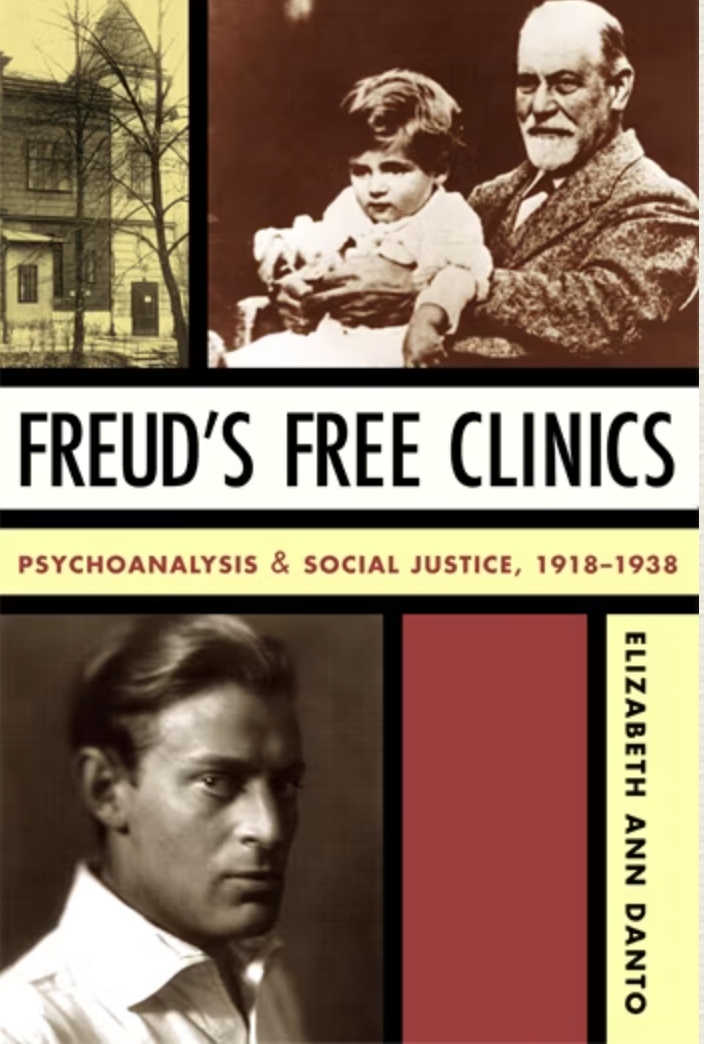
Elizabeth Ann Danto is emeritus professor at Hunter College – City University of New York, and an independent curator who writes and lectures internationally on the history of psychoanalysis as a system of thought and a marker of urban culture. She is the author of Historical Research (Oxford University Press, 2008) and her book Freud’s Free Clinics – Psychoanalysis and Social Justice, 1918–1938 (Columbia University Press, 2005) received the Gradiva Book Award and the Goethe Prize.

View Event →
Decolonizing Psychoanalytic Technique: One-Year Publication Celebration
May
1

Decolonizing Psychoanalytic Technique: One-Year Publication Celebration

RSVP HERE!

Come join us for the 1-year anniversary of the publication of the book Decolonizing Psychoanalytic Technique: Putting Freud on Fanon's Couch, winner of a 2024 Gradiva Award for Best Book! The event will take place in-person at the Foundation for Community Psychoanalysis. There will be a Zoom option available for those wishing to attend remotely (a link will be sent the day of the event).

Featuring a panel discussing the book with the author as well as artists interpreting the book's implications for activism and advocacy, this evening promises to generate discussion on the art and science of psychoanalytic therapy from a decolonial perspective.

Panelists include:

Daniel José Gaztambide, PsyD (Author)
Rossanna Echegoyen, LCSW
Kirkland Vaughans, PhD

Performances by:

Mario José Pagan Morales
Isa Anastasia Rivas

View Event →
Working Group on Community Mental Health - Meeting 7
Apr
30

Working Group on Community Mental Health - Meeting 7

  • The Foundation for Community Psychoanalysis (map)
  • Google Calendar ICS

This is the 7th meeting of the Working Group. If you’re new to this space, please sign up here! Workers in the institutions of community mental health are especially invited, but all are welcome.

The institutions of community mental health are broken. Clients are captured by the institutional circuit, shuffled between supported housing, jail, hospital, day program, case management, clinic, homeless shelter, and the street. This fragmentation has made “continuity of care” a buzzword, placing hope in the technocratic expansion of surveillance, assessment, and measurement. In reality, workers are left holding the pieces, providing needed care outside our formal work roles and frequently ending up frustrated, dejected, and burnt out.

We are not alone. Though institutions are siloed, our shared work can be an occasion for solidarity. This Working Group will gather workers in many roles and contexts of care. United by our recognition of systemic failure and our desire to build something better, we aim to theorize our work, develop new approaches, and build capacity to put them into practice. We will draw on our own experience, contemporary scholarship, and historical precedents to resist the dehumanizing effects of the status quo and put forward alternatives.

The Working Group will be facilitated by Dr. Christopher Landry.

View Event →
Action Lab’s Political Education Training
Apr
24

Action Lab’s Political Education Training

RSVP HERE!

Join us for our second Political Education Training on April 24. Hosted by The Action Lab, these full-day sessions explore political education rooted in radical history and collective practice. Open to the public—space is limited, RSVP now.

The Action Lab’s political education (“PE”) programming is designed to deepen the political analysis of community organizers, equipping them with the tools to refine their power-building strategies and bring transformative insights into their organizations. Throughout the program, we strive to integrate personal connection, political theory, experiential learning, and direct application to current conditions, ensuring that the content is not only intellectually rigorous but also immediately relevant to organizers’ work.

The Action Lab is a strategy center for social movements that sparks political and personal liberation. We provide rigorous and joyful spaces for organizers, leaders and artists to learn, to create, and to strengthen our capacity to win. We strive to build a powerful culture that lifts us out of the immediate and enables us to envision and realize our way to a just future.

View Event →
Sons, Daughters, and Sidewalk Psychotics: Mental Illness and Homelessness in Los Angeles w/ Neil Gong
Apr
19

Sons, Daughters, and Sidewalk Psychotics: Mental Illness and Homelessness in Los Angeles w/ Neil Gong

RSVP HERE!

This talk compares public safety net and elite private psychiatric treatment in Los Angeles to show how inequality shapes the very meanings of mental illness, recovery, client choice, and personhood. In Downtown LA, the crises of homelessness and criminalization mean public safety net providers define recovery as getting a client housed, not in jail, and not triggering emergency calls. Given insufficient treatment capacity, providers eschew discipline for a “tolerant containment” model that accepts medication refusal and drug use so long as undesired behavior remains indoors. For elite private providers serving wealthy families, on the other hand, recovery means normalization and generating a respectable identity. Far from accepting madness and addiction, providers use a “concerted constraint” model to therapeutically discipline wayward adult children. Turning theoretical expectation on its head, I show how “freedom” becomes an inferior good and control a form of privilege.

Neil Gong is assistant professor of sociology at UC San Diego. He is author of Sons, Daughters, and Sidewalk Psychotics (University of Chicago Press 2024) and co-editor (with Corey Abramson) of Beyond the Case: The Logics and Practices of Comparative Ethnography (OxfordUniversity Press 2020). Neil's public writings have appeared in such venues as the Washington Post, the Atlantic, and the Los Angeles Times.

* * *

Psychosis in the City is a series curated by Dr. Christopher Landry, a psychiatrist, psychoanalytic candidate at Columbia University, and a Foundation for Community Psychoanalysis Community Psychoanalysis Grant Recipient. He is the Associate Medical Director at Fountain House, a therapeutic community supporting recovery for people with Serious Mental Illness, and co-founder of the Constellation Program, a psychoanalytically-informed treatment program for young adults experiencing psychosis and extreme states.

With the Foundation for Community Psychoanalysis Chris is working on three interrelated endeavors. The Foundation supports the Constellation Program as a space for 1:1 therapy as well as group work facilitated by Isaiah Madison. Chris also organizes the Working Group for Community Mental Health Workers and he leads the speaker series Psychosis in the City, produced in collaboration with the Greene Clinic Speaker Series, hosted at the Foundation space.

View Event →
FCP Fellows Host a Movie Night: The Substance
Apr
17

FCP Fellows Host a Movie Night: The Substance

The Fellows at The Foundation for Community Psychoanalysis are excited to invite psychoanalytic colleagues in the community to a Movie Night!

A brief introduction will be given regarding associations to works by Anzieu (1987), Lemma (2010), and Werbart (2019). 

We hope for a relaxed evening of movie watching and mingling.

View Event →
Action Lab’s Embodied Purpose Practice Circle
Apr
17

Action Lab’s Embodied Purpose Practice Circle

RSVP HERE!

We invite you to join us for a whole day of collective practice where we’ll explore what it means to meet this moment with more presence, connection, and purpose.

We want to practice pausing together—to recenter what matters to us. This is a space to recommit to fighting and healing in social movement.

The Action Lab is a strategy center for social movements that sparks political and personal liberation. We provide rigorous and joyful spaces for organizers, leaders and artists to learn, to create, and to strengthen our capacity to win. We strive to build a powerful culture that lifts us out of the immediate and enables us to envision and realize our way to a just future.

View Event →
From Breakthrough: Psychoanalytic Treatment of Psychosis w/ Danielle Knafo
Mar
29

From Breakthrough: Psychoanalytic Treatment of Psychosis w/ Danielle Knafo

RSVP HERE!

Dr. Knafo, who has worked with psychosis in a variety of settings for over 40 years, will describe the reasons why she believes most psychoanalysts have veered away from the treatment of psychosis in recent decades. She will then present her approach to meeting the challenges of working with individuals undergoing extreme states. Her approach focuses primarily on providing safety, forging a working alliance by meeting the patient where they are and allotting them maximum personal agency, understanding their symptoms as attempts at adaptation and restoration of the self, coping with loneliness, and working with the transference and countertransference. She works with a patient's strengths as well as weaknesses. Most importantly, Dr. Knafo's approach to therapy involves viewing the patient as a whole person rather than a collection of symptoms, prioritizing subjective experience and affect, and seeing the patient as a true collaborator in their own treatment. Clinical examples will illustrate her points.

Dr. Danielle Knafo is a clinical psychologist and psychoanalyst with expertise in the treatment of psychosis. During her tenure as professor at L.I.U.’s Clinical Psychology Doctoral Program for 22 years, she trained doctoral students on how to work therapeutically and psychodynamically with serious mental illness. She received the prestigious Barbro Sandin award for this work. Currently, she is faculty and supervisor at Adelphi’s Postgraduate Programs and NYU’s Postdoctoral Program for Psychotherapy and Psychoanalysis. She has written and lectured extensively on the topics of art and creativity, psychoanalysis, trauma and psychosis, sexuality and technology. From Breakdown to Breakthrough: Psychoanalytic Treatment of Psychosis is her tenth book. Dr. Knafo has worked psychodynamically with psychosis for 40 years, and she maintains a private practice in Manhattan and Great Neck, NY.

* * *

Psychosis in the City is a series curated by Dr. Christopher Landry, a psychiatrist, psychoanalytic candidate at Columbia University, and a Foundation for Community Psychoanalysis Community Psychoanalysis Grant Recipient. He is the Associate Medical Director at Fountain House, a therapeutic community supporting recovery for people with Serious Mental Illness, and co-founder of the Constellation Program, a psychoanalytically-informed treatment program for young adults experiencing psychosis and extreme states.

With the Foundation for Community Psychoanalysis Chris is working on three interrelated endeavors. The Foundation supports the Constellation Program as a space for 1:1 therapy as well as group work facilitated by Isaiah Madison. Chris also organizes the Working Group for Community Mental Health Workers and he leads the speaker series Psychosis in the City, produced in collaboration with the Greene Clinic Speaker Series, hosted at the Foundation space.

View Event →
Mar
28

The Transgender Psychoanalysts are Coming!

RSVP HERE!

Psychoanalysis has been a long-contested site within queer and transgender scholarship, as it has notoriously advanced some of the most explicitly pathologizing approaches to non-normative gendered and sexual psychic lives. Yet psychoanalysis has also enduringly captured the attention of diversely situated politicized and liberatory theorists. These thinkers have laboured to subvert its otherwise repressive applications, moving psychoanalysis outside of dogmatic clinical realms to explore its more expansive social uses. 

Join a panel of trans clinicians and psychoanalytic theorists at a NYC launch for a new collected volume, The Queerness of Psychoanalysis. Panelists will present their chapters from the volume, followed by a discussion on the past, present, and future of the field for transgender analysts. We will consider what clinical psychoanalysis may accomplish if it is put squarely and unapologetically into transgender people’s hands. The panelists will address topics most pertinent to trans people’s psychological survival within our current cultural climate, including self-articulations of trans childhood, the systemic exclusion of practicing trans clinicians, and the psychological formations of transphobia. In so doing we may overturn our shared psychoanalytic cis-tuation and contribute to a more pluralistic field. 

In person presentations planned by volume co-editor Myriam Sauer, and contributors Griffin Hansbury, Tobias Wiggins, and M. E. O’Brien. 

The Queerness of Psychoanalysis: From Freud and Lacan to Laplanche and Beyond (Routledge, 2024) is an exploration of psychoanalysis’ often complicated and fraught history with thinking about queerness, as well as its multifaceted heritage. 

This event is sponsored by Pulsion Institute.

Pulsion, the International Institute of Psychoanalysis and Psychoanalytic Psychosomatics, is an institute in New York City offering a Certificate Training Program in Psychoanalysis, LP-Qualifying. Its mission embraces a psychoanalytic theory and technique built on the foundation of the economic model of Freud's theories of the drives, language, and the Other meeting the demands of cultural evolution. Pulsion aims to foster a deep appreciation for the unconscious, for the Other that resides within. Because this Otherness resists domestication, Pulsion places equal emphasis on the subject as an individual and the subject who is part of a social fabric, especially the ways in which the social has failed individuals.

BIOS:

Myriam Sauer (she/her) is a PhD candidate at the Latin‑America Institute of Freie Universität Berlin, Berlin, Germany, as well as a writer and poet. Her first novel, entitled Passage durch den reißenden Strom (A Torrential Passage), came out in Fall 2023 with Querverlag. She recently edited, alongside Elisabeth Punzi and Vanessa Sinclair, the collected volume, The Queerness of Psychoanalysis. Her primary academic interests lie in the fields of psychoanalysis, sociology, queer studies, literature, and philosophy.

Griffin Hansbury, LCSW‑R (he/him) is a psychoanalyst in practice since 2001. As an internationally recognized expert on trans identity, he was the first psychoanalyst to widely publish as openly transsexual. His writing on the subject has advanced the field, appearing in several peer‑reviewed journals, including The Journal of the American Psychoanalytic Association, Psychoanalytic Dialogues, Studies in Gender and Sexuality, The Psychoanalytic Review, and TSQ: Transgender Studies Quarterly. His article “The Masculine Vaginal: Working With Queer Men’s Embodiment at the Transgender Edge” has been translated and published in several countries, including Argentina, Germany, and Italy. He is also the author of several books, including Vanishing New York and Feral City, under his pen name Jeremiah Moss, and the novel Some Strange Music Draws Me In. He lives in New York City.

M.E. O’Brien, PhD, LCSW (she/her) is a practicing analytic clinician in New York City. She has two books, Family Abolition: Capitalism and the Communization of Care (Pluto Press, 2023), and the co‑authored speculative novel, Everything for Everyone: An Oral History of the New York Commune, 2052–2072 (Common Notions, 2022). She is also on the editorial collective at Pinko, a magazine on gay communism. She completed a PhD at New York University, where she wrote on how capitalism shaped New York City’s LGBTQ social movements. She is currently a psychotherapist, a licensed clinical social worker, and in formation as an analyst. She is a candidate at Pulsion, a psychoanalytic institute in New York City.

Tobias Wiggins, PhD (he/him) is an associate professor of Women’s and Gender Studies at Athabasca University (AU) in Alberta, in Canada. His research specializations include transgender mental health and sexuality, psychoanalysis, research-creation, queer visual culture, and cisgender psychology. Broadly, Wiggins’ work aims to address the continued pathologization of gender diversity and advocate for trans-competent care. His recent scholarly outputs include contributions to significant trans anthologies likeThe Queerness of Psychoanalysis(2024), Gender-Affirming Psychiatric Care(2023), Sex, Sexuality and Trans Identities(2020); journals including Studies in Gender and Sexuality(2022), The Psychoanalytic Study of the Child(2021), and Transgender Studies Quarterly(2020);as well as well as community-based publication projects and digital storytelling.

View Event →
Working Group on Community Mental Health - Meeting 6
Mar
26

Working Group on Community Mental Health - Meeting 6

  • The Foundation for Community Psychoanalysis (map)
  • Google Calendar ICS

This is the 6th meeting of the Working Group. If you’re new to this space, please sign up here! Workers in the institutions of community mental health are especially invited, but all are welcome.

The institutions of community mental health are broken. Clients are captured by the institutional circuit, shuffled between supported housing, jail, hospital, day program, case management, clinic, homeless shelter, and the street. This fragmentation has made “continuity of care” a buzzword, placing hope in the technocratic expansion of surveillance, assessment, and measurement. In reality, workers are left holding the pieces, providing needed care outside our formal work roles and frequently ending up frustrated, dejected, and burnt out.

We are not alone. Though institutions are siloed, our shared work can be an occasion for solidarity. This Working Group will gather workers in many roles and contexts of care. United by our recognition of systemic failure and our desire to build something better, we aim to theorize our work, develop new approaches, and build capacity to put them into practice. We will draw on our own experience, contemporary scholarship, and historical precedents to resist the dehumanizing effects of the status quo and put forward alternatives.

The Working Group will be facilitated by Dr. Christopher Landry.

Future meeting dates:

  • April 30, 2025

View Event →
The Repetition of Trauma in the Psychiatric Setting w/ Elan Cohen
Mar
13

The Repetition of Trauma in the Psychiatric Setting w/ Elan Cohen

RSVP HERE!

As Paul Racamier observed, psychiatric institutions are vulnerable to a reversal in their therapeutic purpose, sometimes adopting the symptoms they aim to treat. Other stakeholders have noted that psychiatric services can be retraumatizing, duplicating the forms of suffering that are embedded in symptoms of madness and trauma on a massive scale. What insights can psychoanalysis offer to disrupt the repetition of trauma in psychiatric services? Embracing a history of psychoanalytic thought, this talk critiques prevailing biopolitical approaches and reimagines therapeutic practice to honor the dignity and subjectivity of persons with psychosis. Drawing from Freud, Ferenczi, Bion, and Lacan, the presentation advocates for clinical approaches that focus on the relationship between the subject of psychosis and the social link. By locating the etiology of psychiatric suffering in traumatic human relationships, attacks on linking, or foreclosure from the symbolic order, we might have a better chance at addressing the repetition of trauma in psychiatric services.

Elan Cohen holds a PhD in Clinical Psychology from Adelphi University, where he researched the intersections of historical trauma and psychosis through the lenses of biopolitics and psychoanalysis. Since 2012, his clinical experience has included community mental health programs, state psychiatric centers, city hospitals, and outpatient clinics. His writing has appeared in the Journal of Psychoanalysis, Culture & Society, Ethical Human Psychiatry and Psychology, and Psychosis. He is currently a postdoctoral fellow at Soho Psychoanalytic, where he works with adolescents and adults of all ages, identities, and socio-cultural backgrounds.

* * *

Psychosis in the City is a series curated by Dr. Christopher Landry, a psychiatrist, psychoanalytic candidate at Columbia University, and a Foundation for Community Psychoanalysis Community Psychoanalysis Grant Recipient. He is the Associate Medical Director at Fountain House, a therapeutic community supporting recovery for people with Serious Mental Illness, and co-founder of the Constellation Program, a psychoanalytically-informed treatment program for young adults experiencing psychosis and extreme states.

With the Foundation for Community Psychoanalysis Chris is working on three interrelated endeavors. The Foundation supports the Constellation Program as a space for 1:1 therapy as well as group work facilitated by Isaiah Madison. Chris also organizes the Working Group for Community Mental Health Workers and he leads the speaker series Psychosis in the City, produced in collaboration with the Greene Clinic Speaker Series, hosted at the Foundation space.

View Event →
Working Group on Community Mental Health - Meeting 5
Feb
26

Working Group on Community Mental Health - Meeting 5

  • The Foundation for Community Psychoanalysis (map)
  • Google Calendar ICS

This is the 5th meeting of the Working Group. If you’re new to this space, please sign up here! Workers in the institutions of community mental health are especially invited, but all are welcome.

The institutions of community mental health are broken. Clients are captured by the institutional circuit, shuffled between supported housing, jail, hospital, day program, case management, clinic, homeless shelter, and the street. This fragmentation has made “continuity of care” a buzzword, placing hope in the technocratic expansion of surveillance, assessment, and measurement. In reality, workers are left holding the pieces, providing needed care outside our formal work roles and frequently ending up frustrated, dejected, and burnt out.

We are not alone. Though institutions are siloed, our shared work can be an occasion for solidarity. This Working Group will gather workers in many roles and contexts of care. United by our recognition of systemic failure and our desire to build something better, we aim to theorize our work, develop new approaches, and build capacity to put them into practice. We will draw on our own experience, contemporary scholarship, and historical precedents to resist the dehumanizing effects of the status quo and put forward alternatives.

The Working Group will be facilitated by Dr. Christopher Landry.

Future meeting dates:

  • March 26, 2025

  • April 30, 2025

View Event →